I get asked this almost every week, usually by someone who has been stretching on their own for months and still feels tight every morning: is assisted stretching worth it? My honest answer: it depends on what you expect, how often you go, and who is stretching you. I am Vivek Pandya, a Certified Fascial Stretch Therapy Practitioner — Level 2, trained through the Stretch to Win Institute — and I run VCan Fitness in Brentwood. Here is the straight answer I give in my own studio, including the cases where I tell people to save their money.
Is Assisted Stretching Worth It? What You Actually Get
When you stretch alone, you lean in until it feels like enough, hold for a few seconds, and stop — usually before the tissue has had a reason to change. You also cannot fully relax the muscle you are stretching, because other muscles are working to hold you in position.
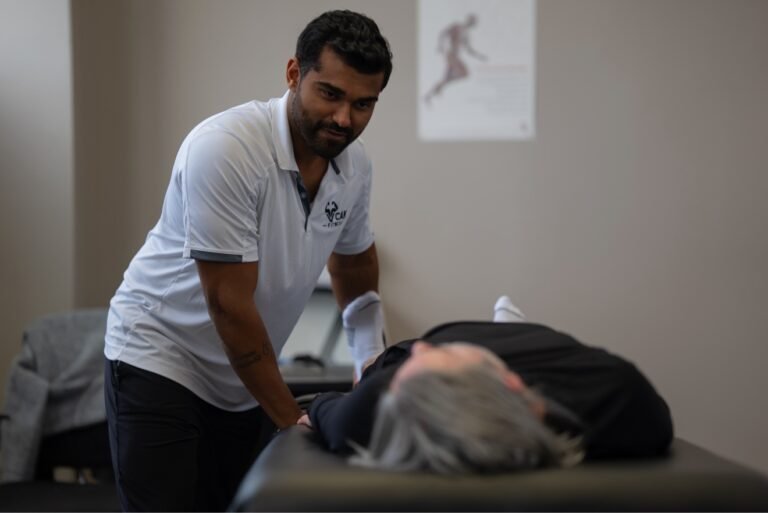
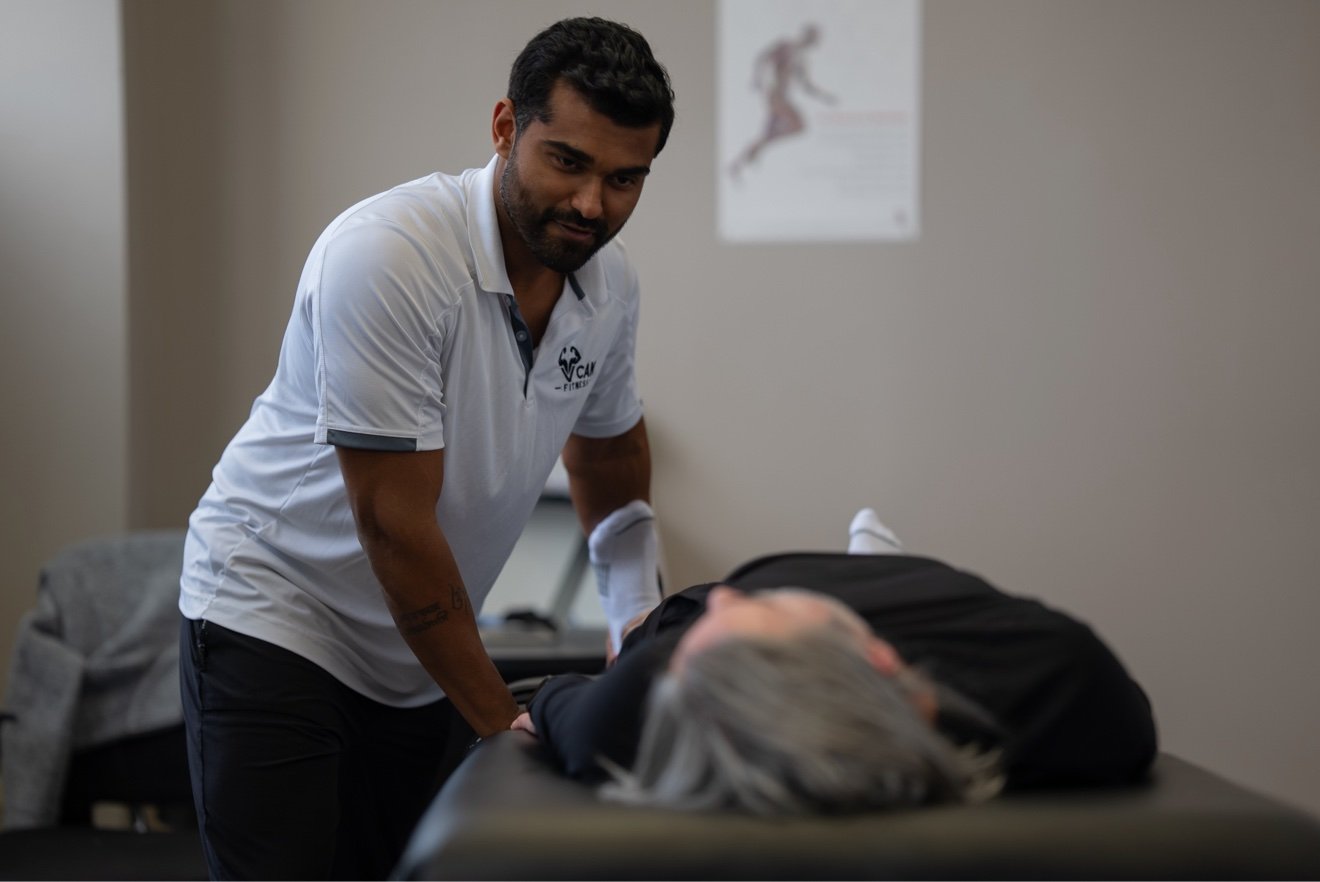
Assisted stretching changes that. You lie on a table, fully clothed, and a practitioner moves your body for you, so your nervous system can let go. At VCan Fitness I practise Fascial Stretch Therapy (FST) — a fascia-focused form of assisted stretching using gentle traction and slow, wave-like movement. Traction creates a little space in the joint first, calming the stretch reflex — the guard that snaps muscles tight when a stretch comes on too fast.
That is why a session feels different from home stretching. I do not pull harder — your body simply is not fighting the stretch, so we can work your hips, spine, shoulders, and legs in ranges you cannot reach alone, especially the fascia that wraps every muscle and joint.
The Honest Pros and Cons of Assisted Stretching
The pros:
- Deeper, more complete work. A practitioner can take a joint through its full range from several directions, including rotations that are almost impossible to do well alone.
- You can actually relax. Relaxation is not a luxury in stretching — it is the mechanism. When your nervous system feels safe, tissue releases.
- Someone is watching how you move. In a first session I do a quick movement check and see where you are tight and where you are compensating. That tells us where to spend time, instead of guessing.
- Consistency becomes easier. Most people stretch for three days, then stop. A booked appointment is a commitment you keep — and consistency is where lasting change comes from.
The cons — I will not hide them:
- It costs money. Stretching at home is free. If your budget is tight, a good daily home routine beats one paid session you cannot repeat.
- One session is not a fix. You will likely walk out feeling looser, but lasting mobility comes from repeated work over weeks. Anyone who promises a permanent result from a single visit is overselling.
- The research is still growing. Harvard Health published a fair, sceptical look at stretching studios, noting the evidence base is smaller than the marketing. I agree with the caution. FST research has reported range-of-motion improvements — but this is mobility and tension work, and I do not present it as more than that.
- Quality varies. Ask where your practitioner trained and what certification they hold, wherever you go.
What It Costs — and How Brentwood Options Compare
Here are real numbers for my studio. At VCan Fitness, the first visit is the Move Freely intro — 30 minutes for $39, for first-time clients. Regular sessions are $75 for 30 minutes and $135 for 60 minutes. No membership is required, and after your intro I will give you an honest frequency recommendation — not a sales pitch.
Both national brands are established, with trained staff — I will not pretend otherwise. Factually, the models differ:
- StretchLab uses PNF-style stretching — contract, relax, stretch deeper — delivered by their Flexologists, with group formats at some locations. Each location sets its own pricing; check their Brentwood page for current rates.
- Stretch Zone uses its own proprietary method with a patented strapping system and advertises a free first stretch in Brentwood. Its model is membership and package based; pricing is on their location page.
- VCan Fitness is private, one-on-one Fascial Stretch Therapy with me — the same practitioner every visit — in a quiet suite, not an open floor, booked one session at a time through Square.
None of those models is automatically right. The fair test: try one session, notice how your body feels for the next few days, and judge the value yourself. For full pricing and first-visit detail, read my guide: Assisted Stretching in Brentwood, TN: Cost, Benefits & What to Expect (2026 Guide). To understand the method first, read Fascial Stretch Therapy vs. Assisted Stretching: What’s the Difference?
How Often Should You Go for It to Be Worth It?
This is where people either get full value or waste their money. Come once, feel great, and never return, and you bought a nice hour — not a change in how you move.
For most clients I recommend weekly sessions for the first four to eight weeks, so your tissue and nervous system get repeated chances to find a looser normal. After that, many move to every other week or monthly for maintenance, with a short home routine. Monthly-only still works — progress is just slower.
Who It Is Worth It For — and Who Should Skip It
Assisted stretching tends to be worth it if you stretch at home and feel tight again by afternoon; if your hips, neck, or shoulders feel stiff from desk work; if you play golf, run, lift, or play pickleball and mobility is limiting how you move; or if you are over 50 and want to stay flexible, balanced, and moving independently.
It is probably not worth it if you are looking for a medical treatment or a guaranteed fix for a specific condition — that is not what I do, and no stretching studio should promise that. It is also not worth it if you already have a disciplined daily mobility practice that is working. Keep doing what works. And if cost is the barrier, start at home: a consistent free routine beats an inconsistent paid one.
Try It Once, Properly, Before You Decide
My studio is at 1648 Westgate Cir Suite 227, Brentwood, TN 37027, inside LUX Salon Suites, serving Brentwood, Franklin, Cool Springs, and greater Nashville. Your first session is a real working session: we check how you move, you get a full FST session, and I tell you honestly how often I think you should come — including if I think you do not need to come often.
Questions before you book? Call or text me at +1 615-998-8456.
Book your $39 Move Freely intro session here — 30 minutes, first-time clients. Come once, feel the difference yourself, and then decide if assisted stretching is worth it for you.
Frequently Asked Questions
Is assisted stretching worth it?
For people who stretch on their own and stay tight, usually yes — if they go consistently. A practitioner can work past your stretch reflex, reach angles and fascia you cannot reach alone, and spot movement patterns you are missing. One session feels good; weekly sessions over four to eight weeks build lasting mobility.
How much does assisted stretching cost in Brentwood, TN?
At VCan Fitness, a first-time 30-minute Move Freely intro is $39. Regular sessions are $75 for 30 minutes and $135 for 60 minutes, with no membership required. Franchise studios in Brentwood and Franklin set their own membership and package pricing — check their location pages for current rates.
How often should you go to assisted stretching?
Most clients start weekly for the first four to eight weeks, then move to every other week or monthly for maintenance. Training load, goals, and how your body responds all matter. At your intro I will give you a specific, honest recommendation.
What are the pros and cons of assisted stretching?
Pros: deeper stretching than most people can do alone, real relaxation on the table, a trained eye on how you move, and an appointment that keeps you consistent. Cons: it costs money, one session will not create lasting change, the research base is still growing, and quality depends on your practitioner’s training.
Is assisted stretching better than stretching on your own?
It does things home stretching usually cannot: you can fully relax while someone else moves you, traction and multi-directional movement can be applied safely, and tight areas you tend to avoid get proper attention. It does not replace daily movement — the best results combine regular sessions with a short home routine.
What happens at a first assisted stretching session?
You stay fully clothed in comfortable workout clothes. We start with a quick movement check, then you lie on the table and I guide you through a Fascial Stretch Therapy session — gentle traction and slow movement through your hips, spine, shoulders, and legs. At VCan Fitness the first visit is the 30-minute Move Freely intro for $39, for first-time clients.